DriveXP
Ease of mind in motion.
Company
Cognizant × GT BSID
My Role
UX Designer (Team of 4)
Tools
Figma · Fusion · Keyshot
Timeline
Sep 2023 - Dec 2023
Description
L4 Cabin Experience: a stepping stone between the present and the autonomous future
Context
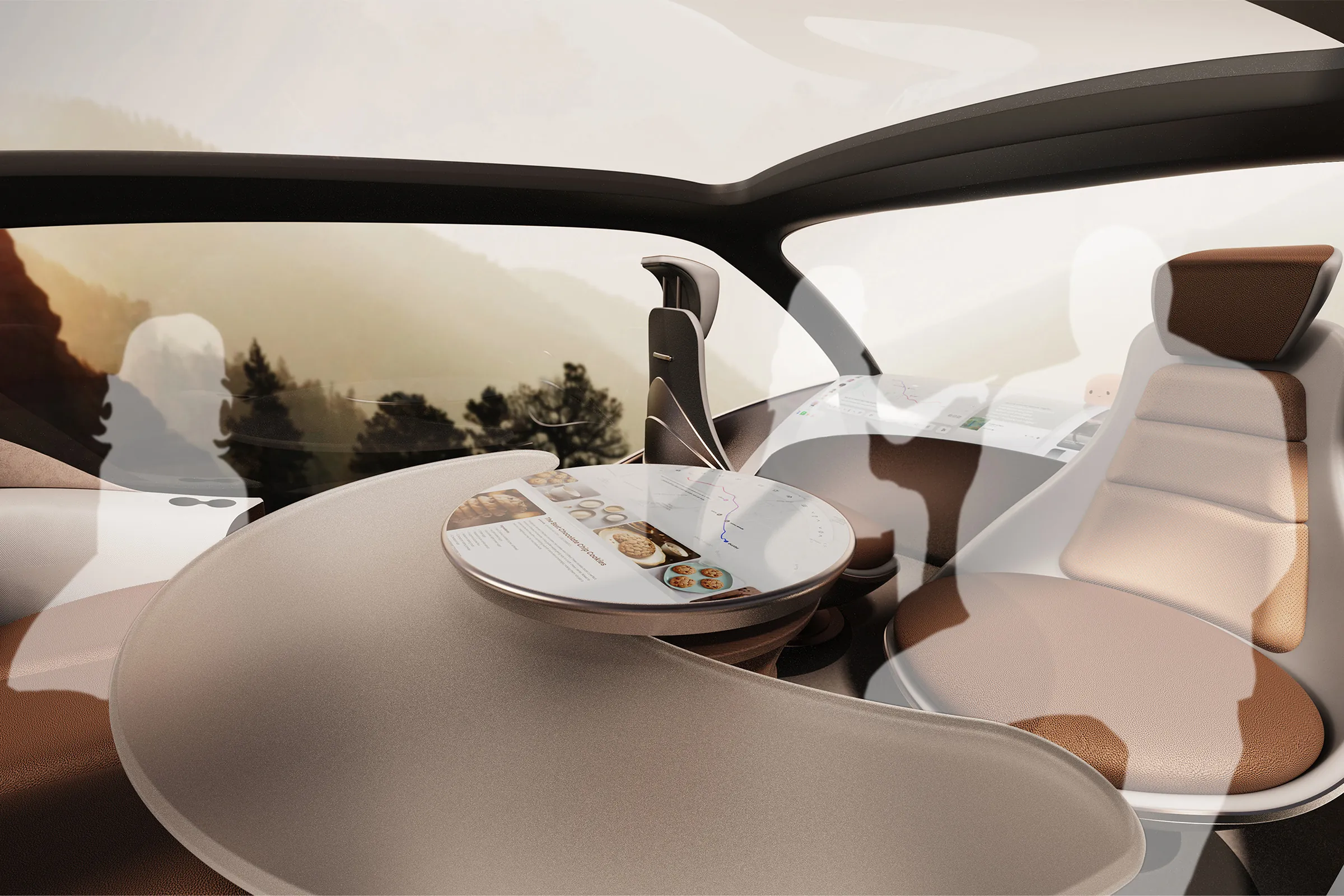
Autonomous vehicles teeter on the edge of science fiction and science fact. Soon, sensors and algorithms will turn our time lost in driving into productivity or leisure. Yet, before full autonomy, how would cabin evolve in this transition? With Cognizant, we developed DriveXP, an L4 vehicle cabin experience.
Driving: Past and Future
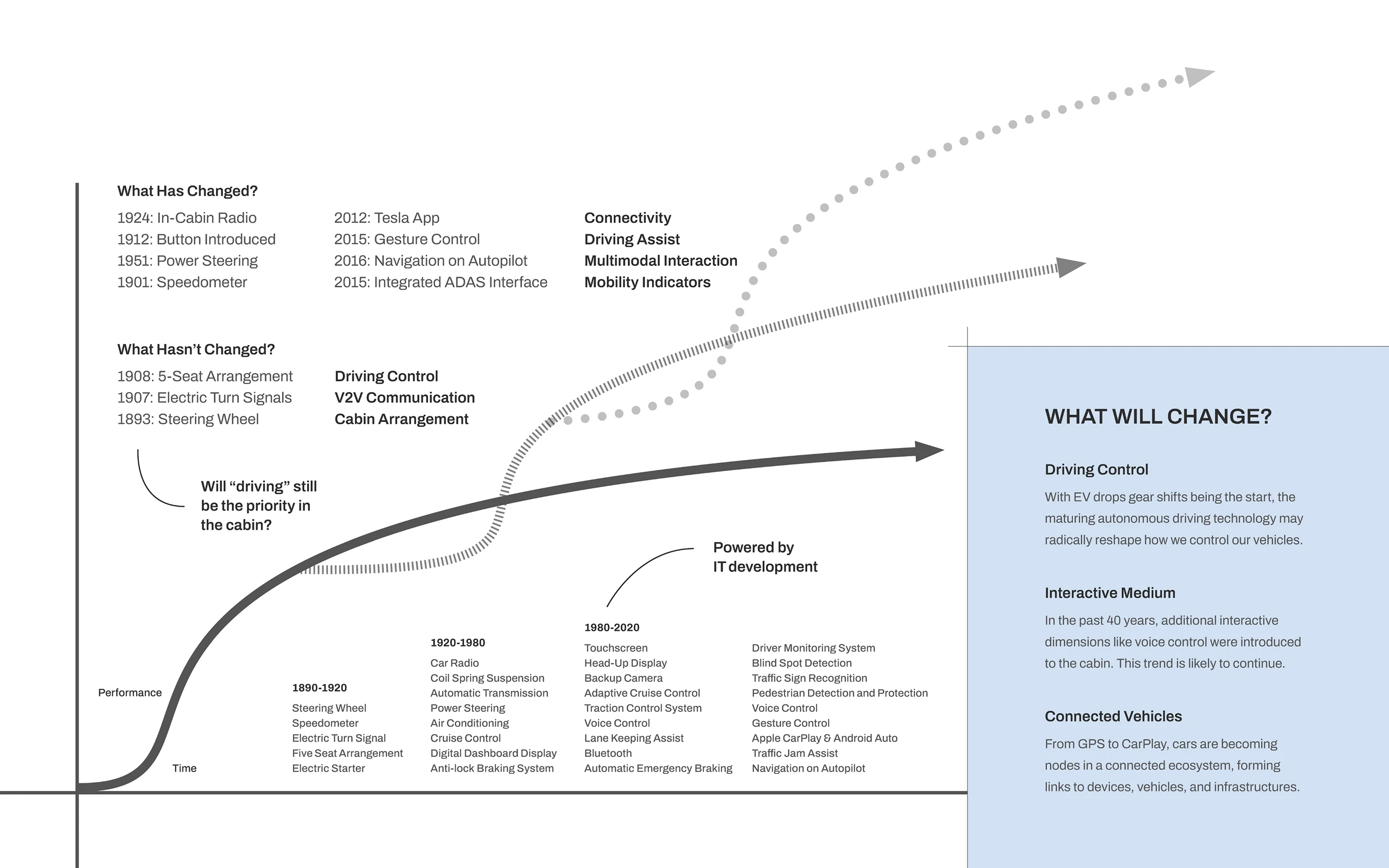
To design for the future, one must first know the past and the present. So, we investigated the history of automobiles from the 1890s until now. While there were many innovations, some elements remained almost identical for over a century. However, we believe that the rise of autonomous driving will demand changes despite user habits and legacy.
The Mental Model Hurdle and Distrust
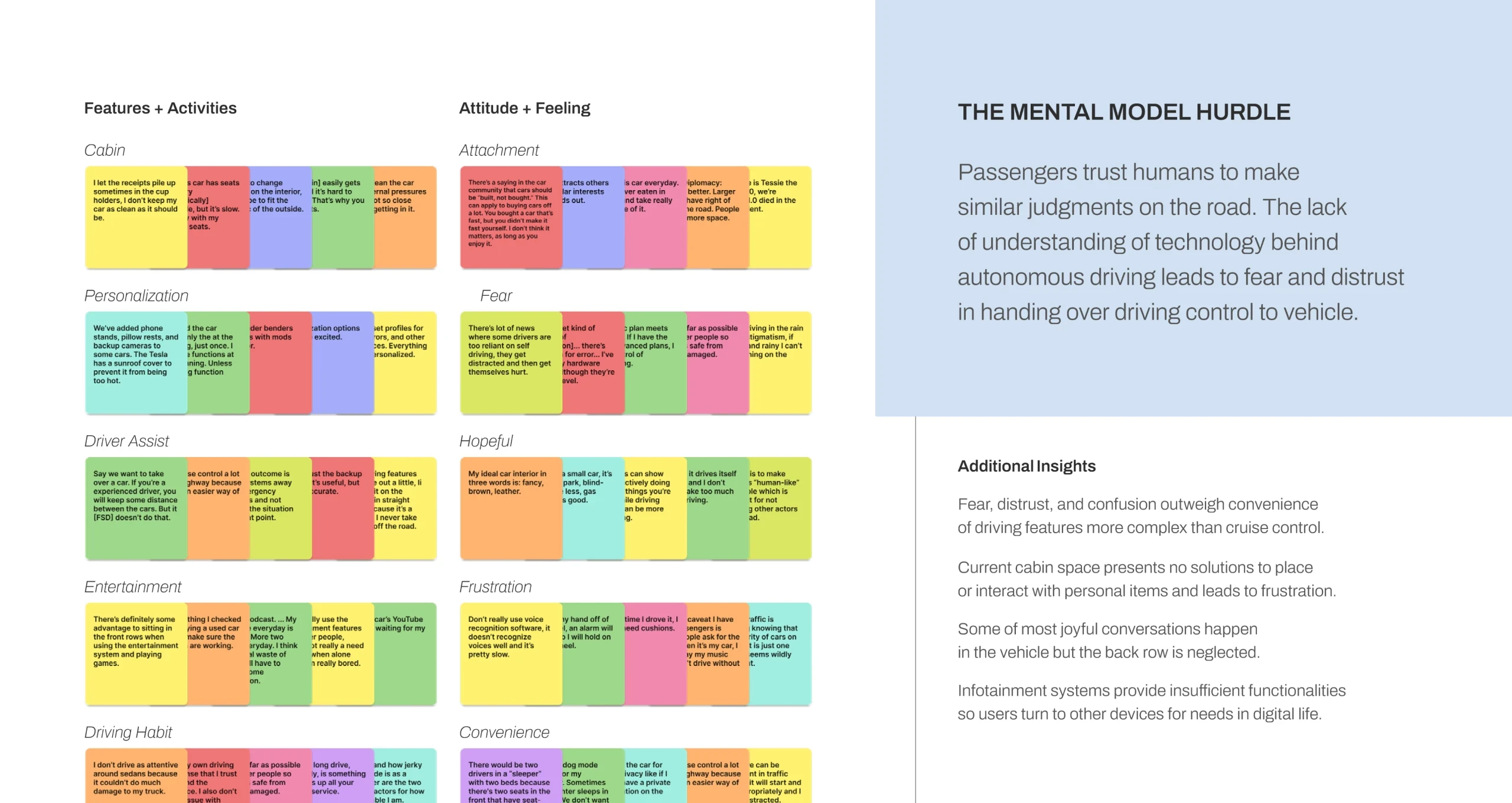
To learn how people approach driving, automation, and vehicles, we conducted 12 interviews with participants including landscape workers, retro car enthusiasts, and FSD users. A survey was also conducted to reach a wider audience. The autonomous future sounds promising, but our research revealed a more complex story: about 70% of our subjects expressed fear of self-driving.
DriveXP | Concept Development
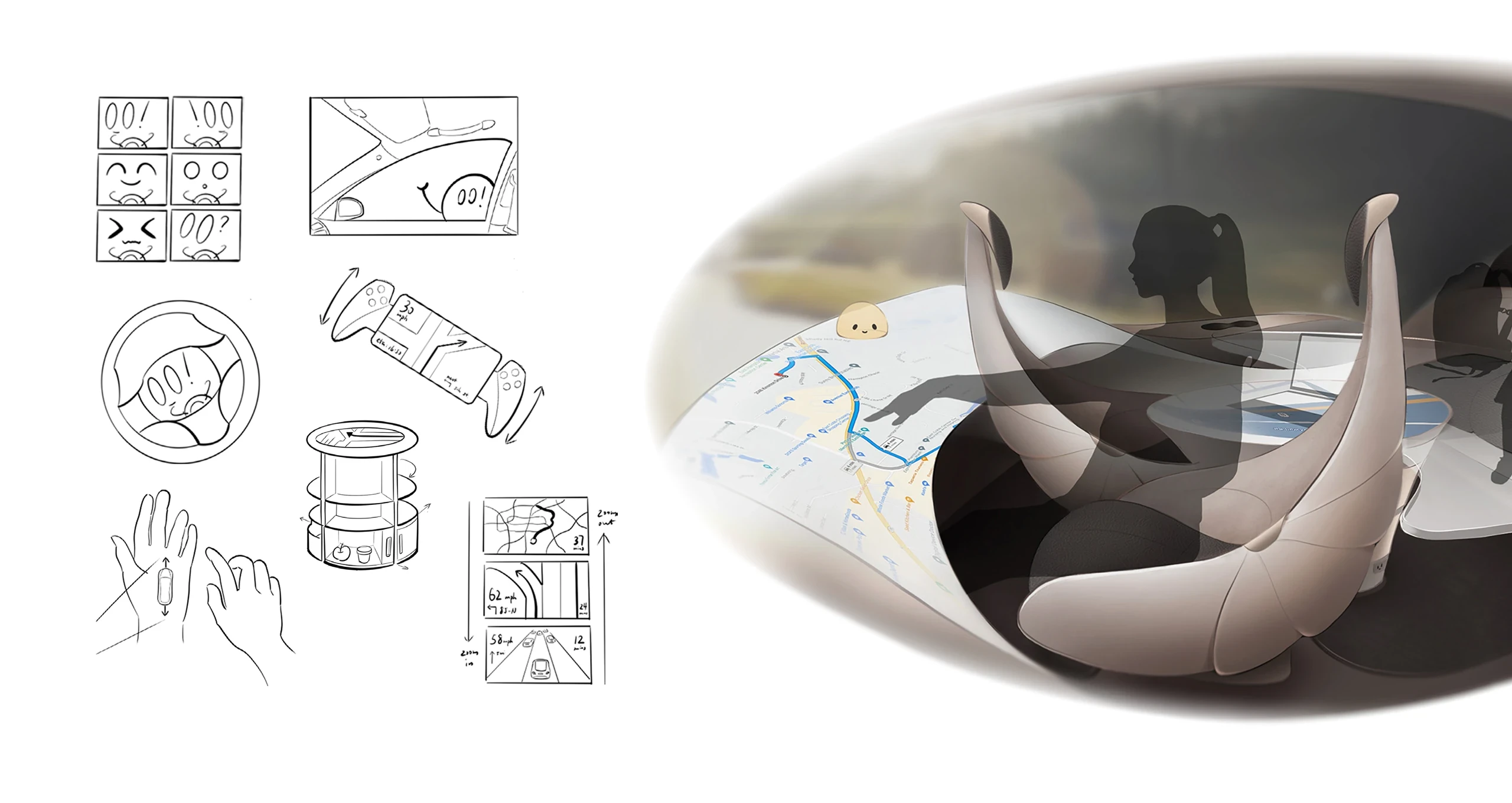
After rounds of ideation, the idea of a Digital Driver bridging the passengers and autonomous systems, along with a Central Hub for interaction and storage, Revolving Seats for equitable cabin social engagement, and Touchscreen Trajectory Control leveraging the existing mental model, stood out.
Testing + Validation
A low-fidelity concept environment was created to validate and refine the experience. The Digital Driver was mocked up with a Pepper’s Ghost illusion HUD, and three levels of feedback were shown. A TV screen played windshield scenarios while a tablet showcased three variations of trajectory control for user input.
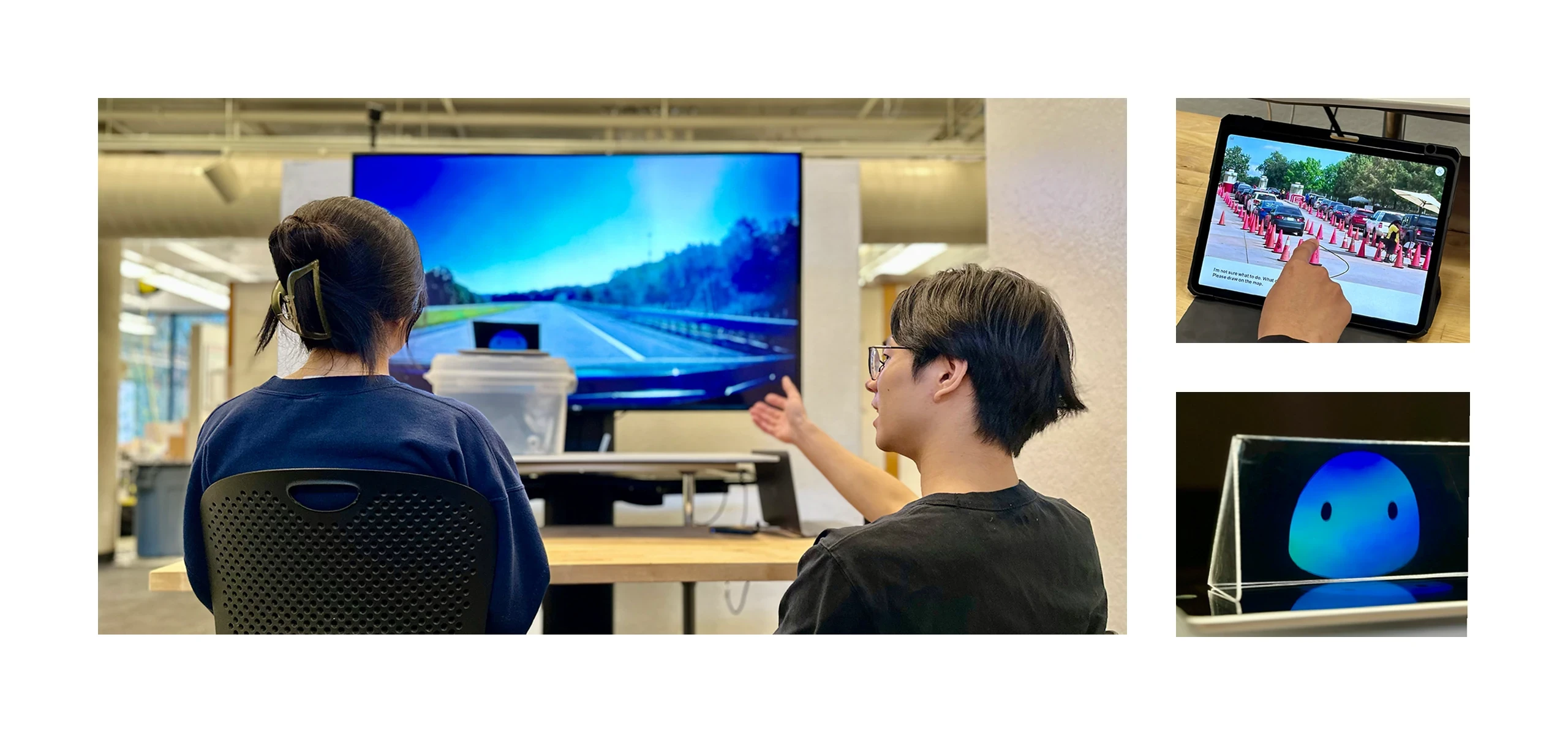
We walked every participant through a grocery shopping journey. Instructions for interacting with the systems were kept to a minimum for observing natural responses. Users showed a strong desire to talk to the Digital Driver and personalize its appearance. For trajectory control, a top view was the only variation that allowed for understanding.
DriveXP | Outcome
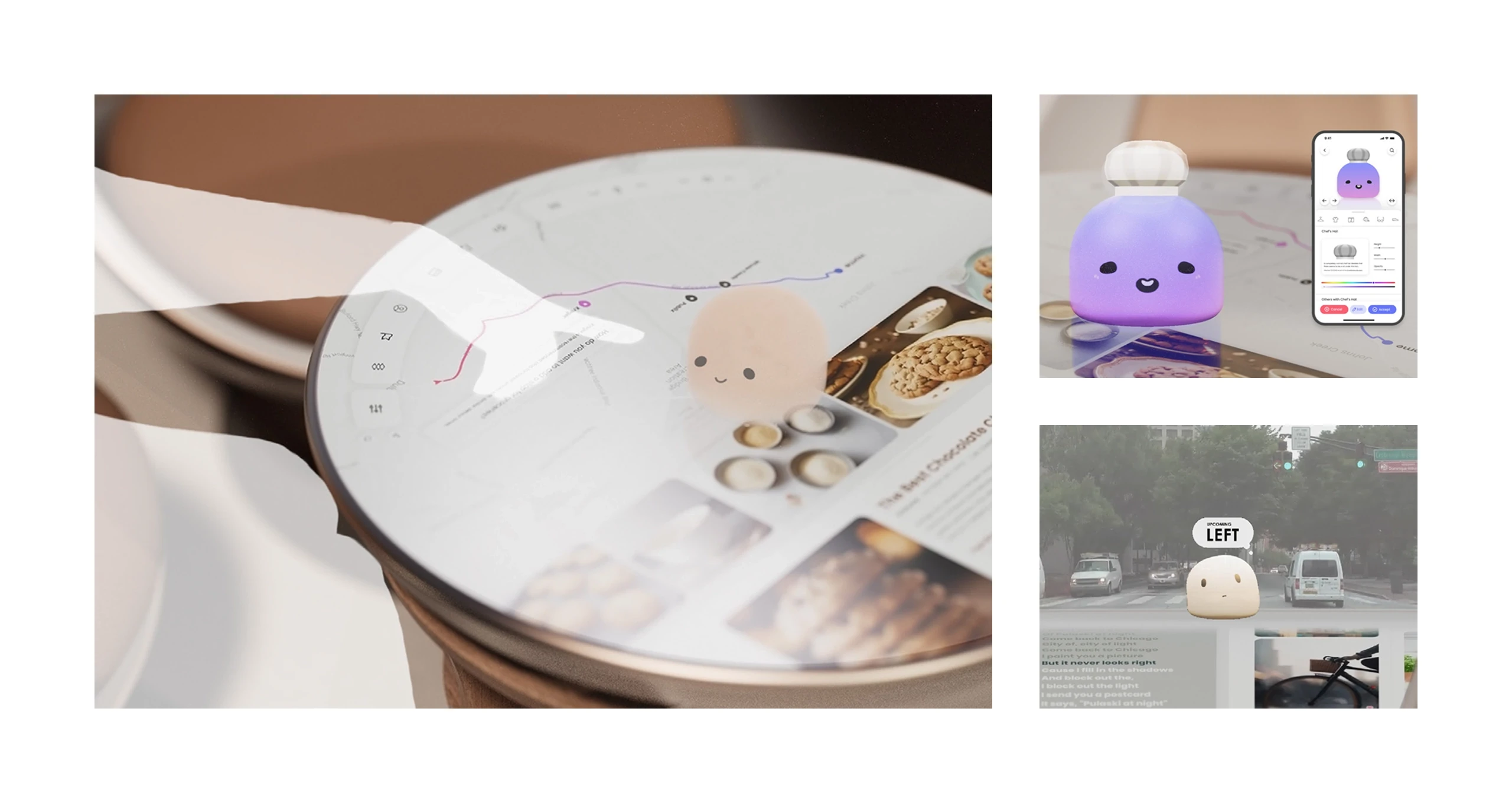
Digital Driver
Introducing the Digital Driver, a holographic assistant designed to bridge the gap between people and autonomous systems. Combining human-like features with automation, it reacts to vehicle dynamics, shows awareness of driving, expresses emotions, and interacts with users. By mimicking real driver behaviors and suggesting personalized routes, the Digital Driver makes travel smoother, more intuitive, and stress-free — allowing passengers to relax, focus on work, or simply enjoy the ride.
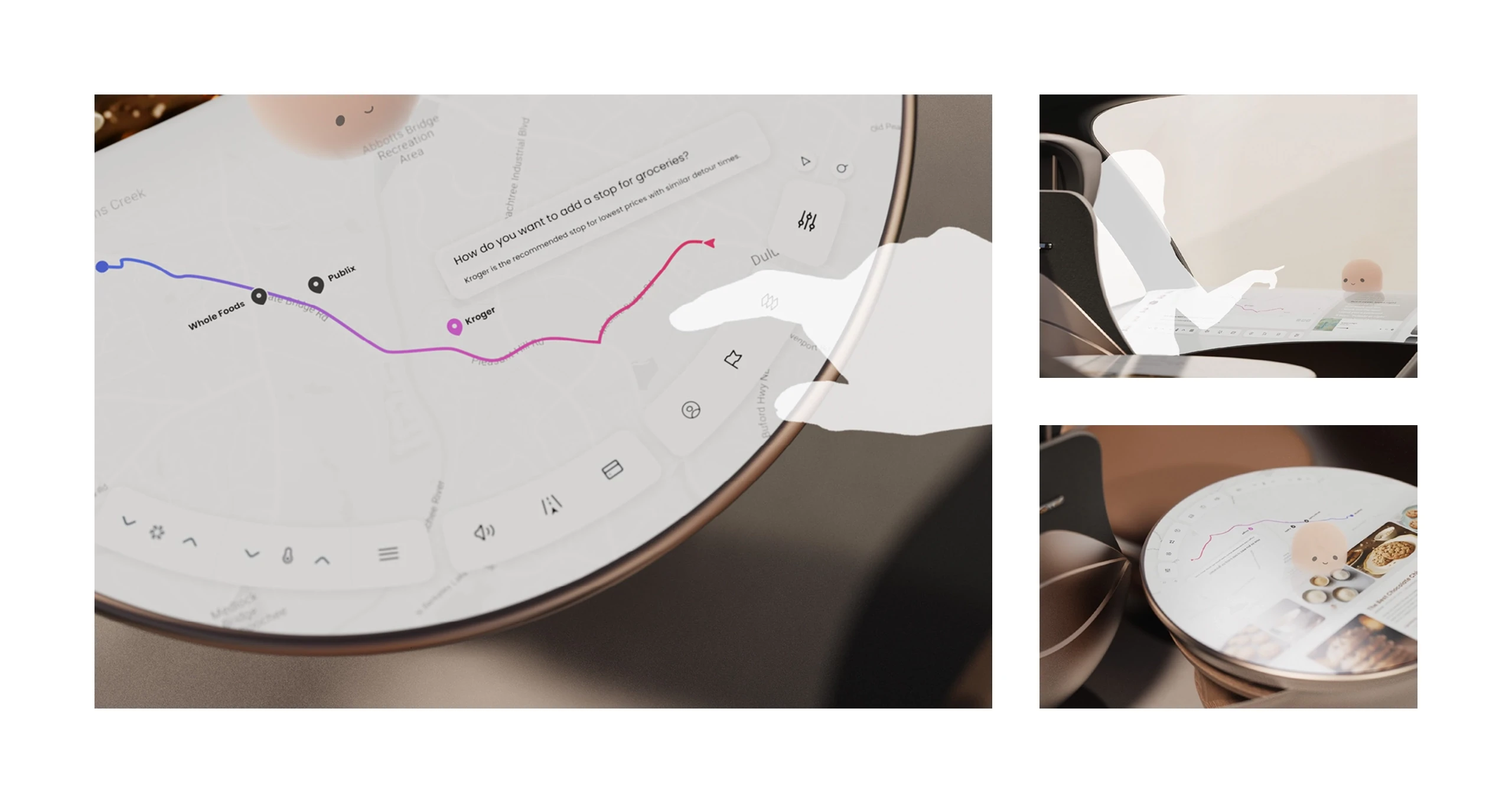
Trajectory Control
Instead of a steering wheel, the vehicle features a virtual command interface that allows users to control it by selecting and drawing trajectories from anywhere in the cabin. This touchscreen-based system offers flexibility for other activities, like watching movies or joining video conferences, while embracing natural user interfaces (NUIs). By leveraging familiar mental models, it ensures a smooth transition into an autonomous future with a shallow learning curve and enhanced versatility.
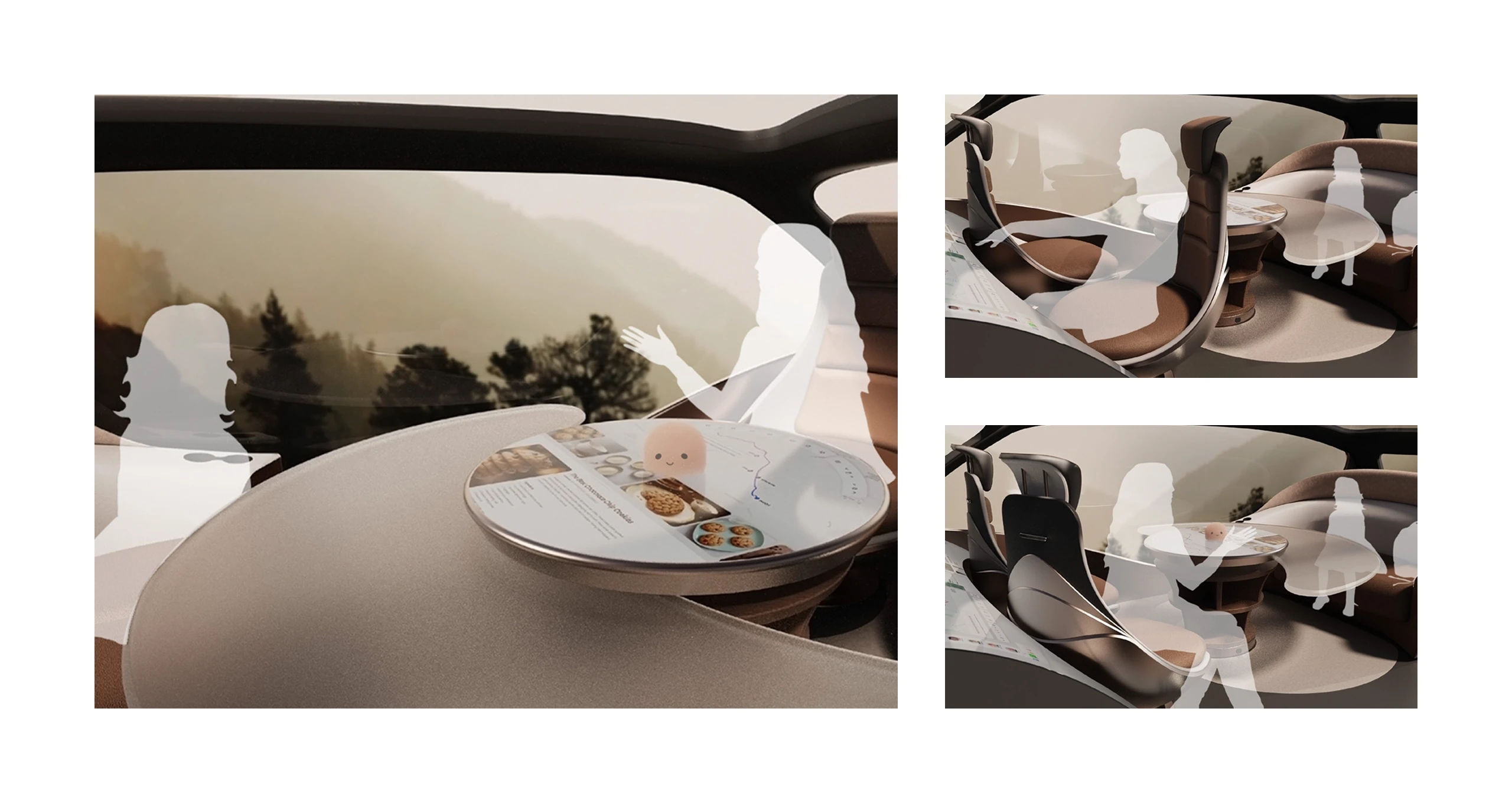
Coaxial Layout
The cabin was redesigned with two swivel front seats, a rear couch, and a Central Hub at the center. This layout encourages face-to-face conversations between rows while maintaining intimacy for one-on-one interactions in the front. The design fosters a social and adaptable space, ideal for both personal and shared experiences.
Credit
Team Member
Cynthia Li, Joyceline Lau, Nikolay Klishko
External Partner
Cognizant
Special Thanks
Noah Posner