Mercuri
Delivering the future.
Company
Edison Electric Bike Co. × GT BSID
My Role
Industrial Designer (Team of 4)
Tools
Fusion · Keyshot · Figma
Timeline
Feb 2024 - May 2024
Description
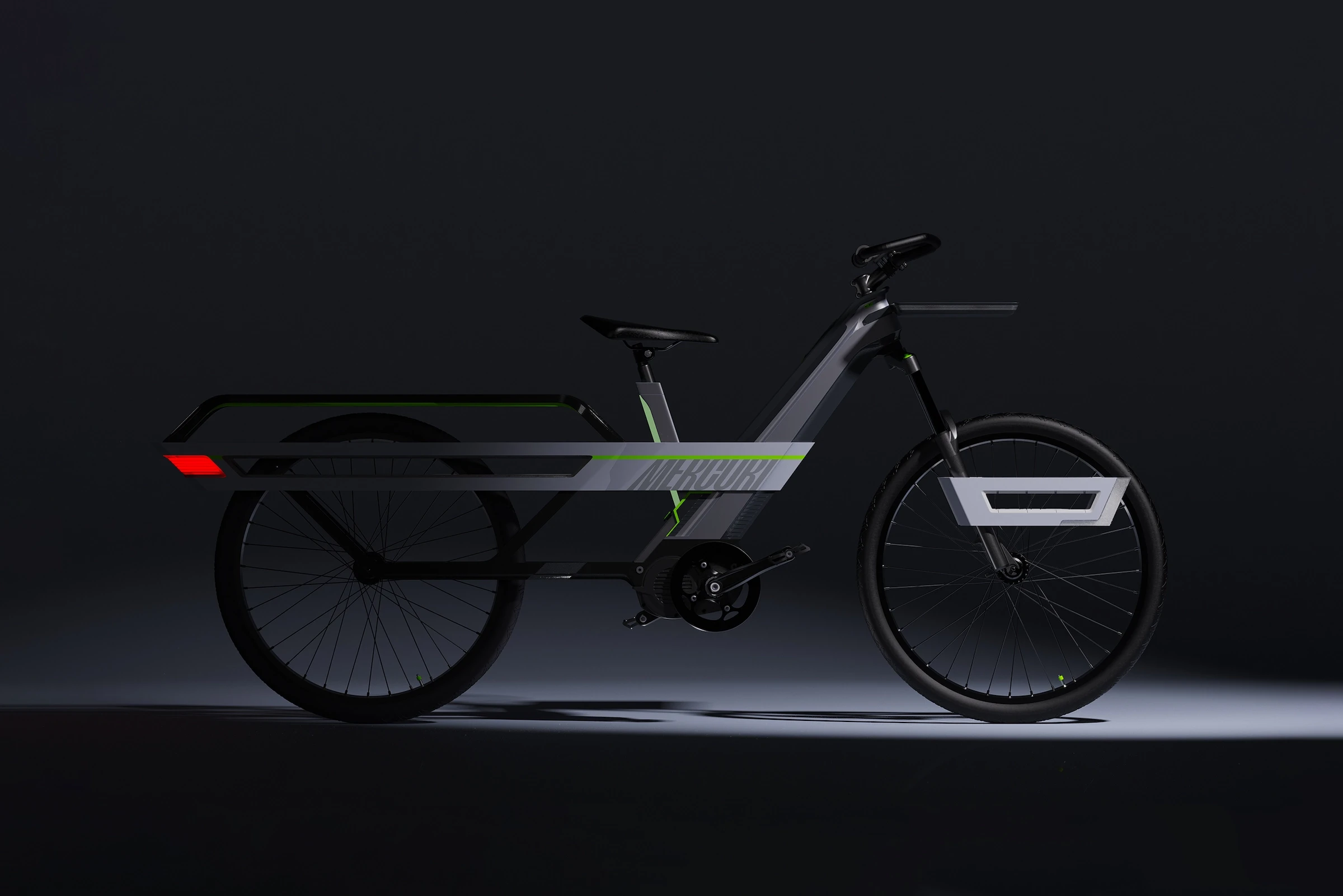
A streamlined future of last-mile delivery on e-bikes.
Context
Finalist of 2025 International Design Excellence Awards (IDEA). After traversing vast distances, the concluding phase of the process bears a disproportionate burden of expenses and obstacles. To tackle this problem, we joined forces with Atlanta-based startup Edison Bikes, to explore how electric bikes can transform this final stretch to be cheaper, smoother, and greener.
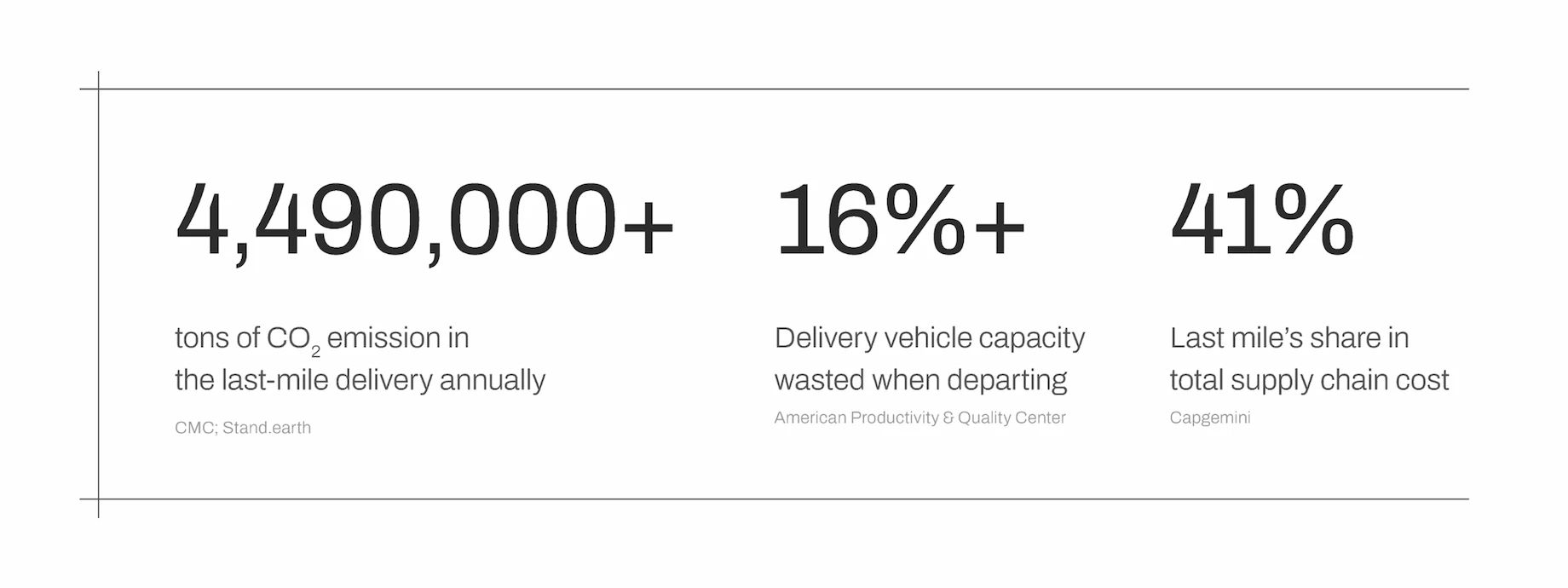
‘Last, but not least’
The concluding phase of the parcel’s journey bears disproportionate expense and environmental impact.
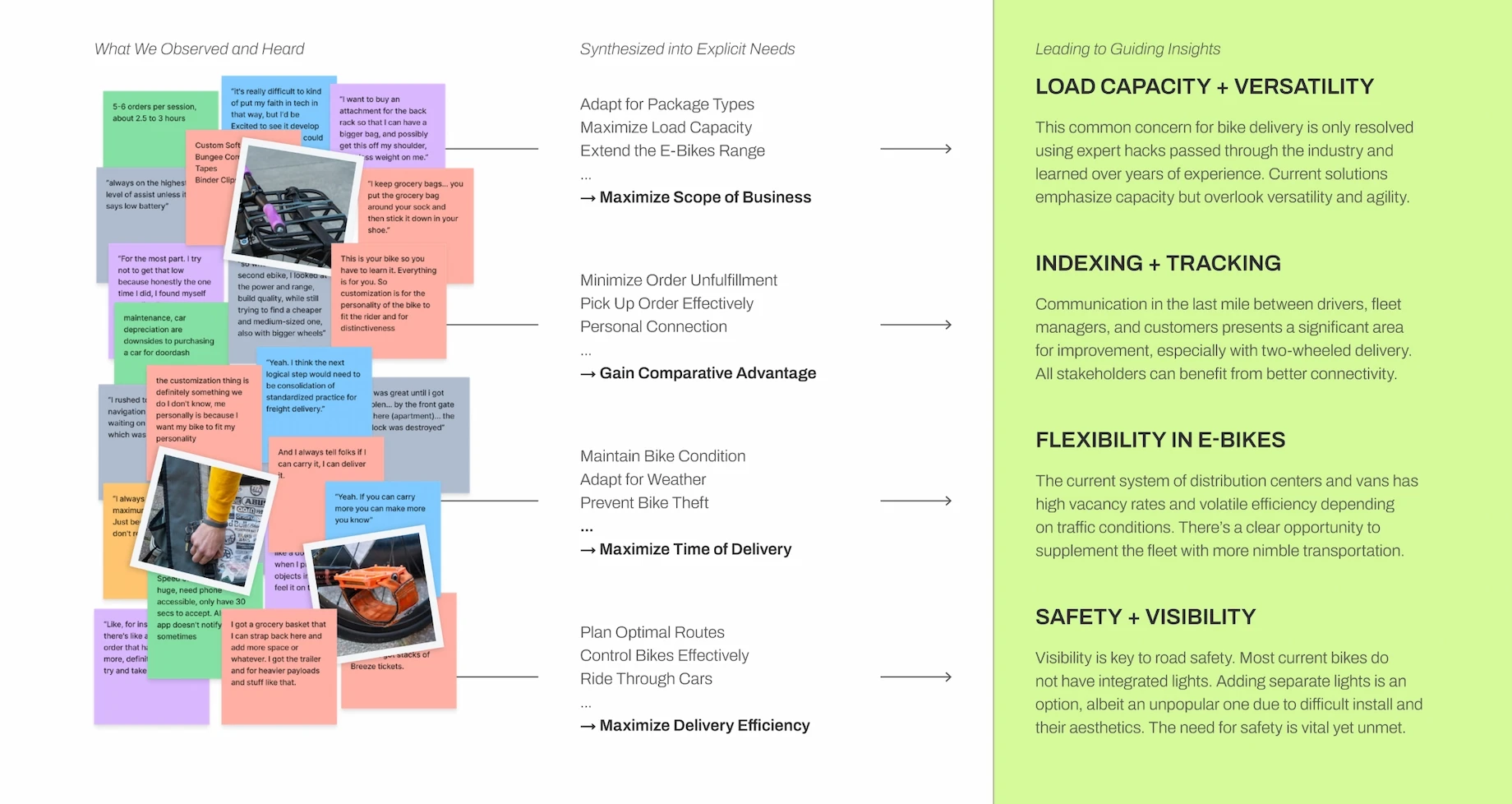
Our team reached out to 30+ delivery professionals, from bike couriers to app-based delivery drivers. Through affinity mapping and why/how ladders, we identified four key pain points and opportunities within the current delivery ecosystem.
Initial Concept + Geometry
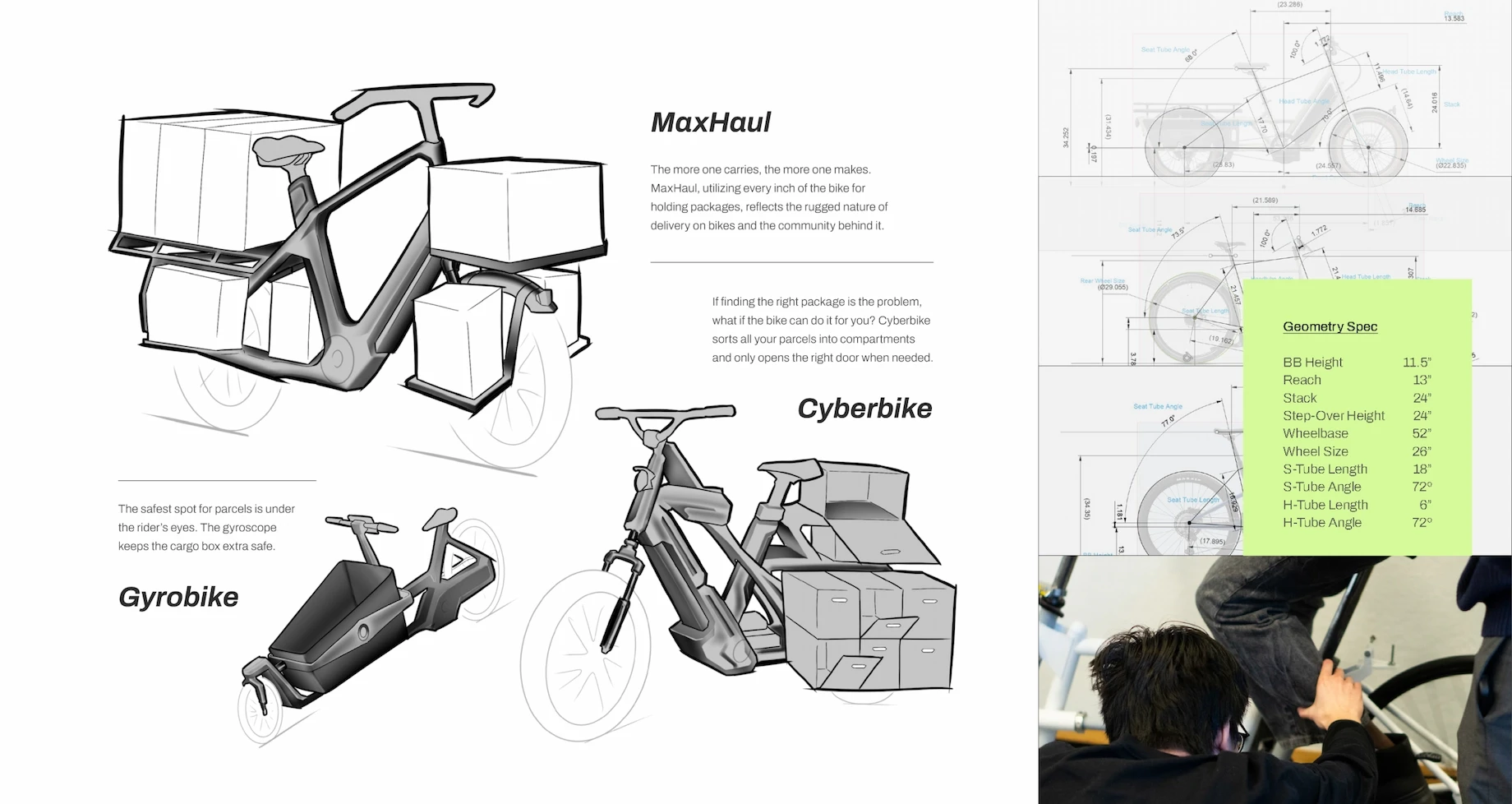
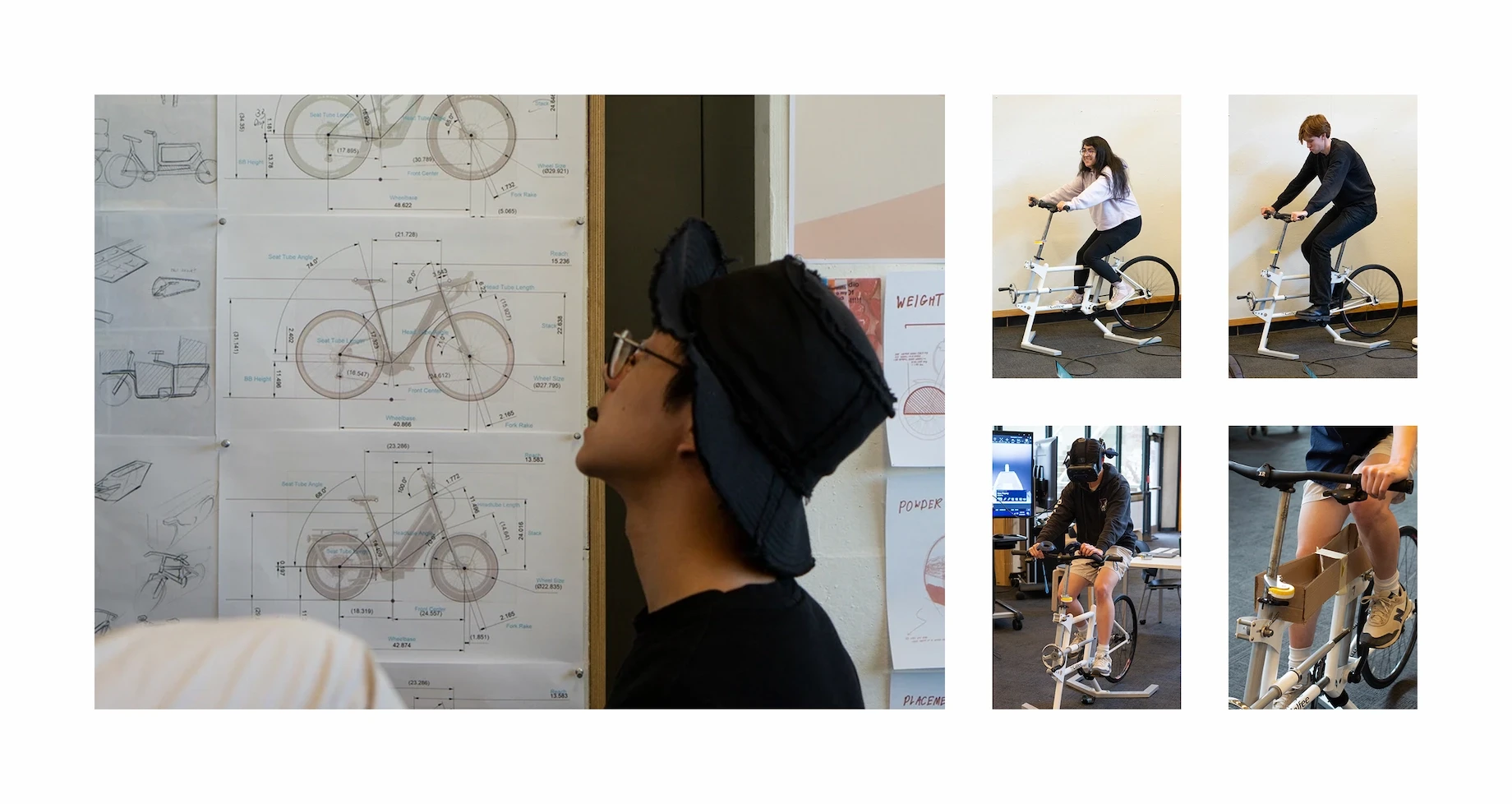
Three pilot concepts were created in response to our insights. We combined the MaxHaul and the Cyberbike and set down the basis of a rear load setup with an extended wheelbase. Rounds of benchmarking and fit bike testing provided us a unique geometry, balancing agility, stability, and potential for load capacity.
Developing in Side View
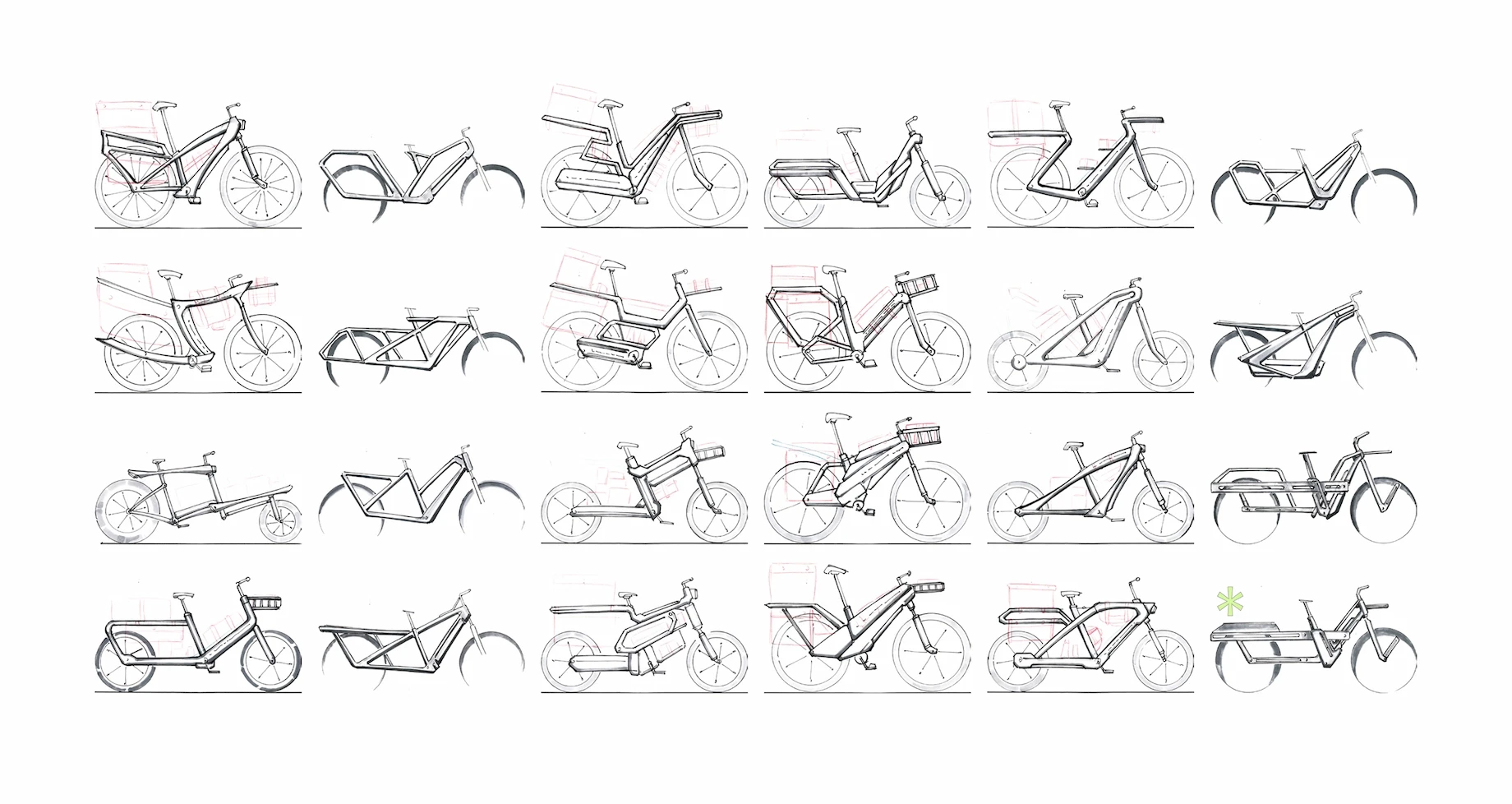
With the direction and geometry settled, we started development from the side view. Parcel arrangements on the vehicle were the first things we explored, ranging from home goods and documents to fountain drinks.
The visual language revolved around a balance of technicality, agility, and ruggedness, embracing courier culture and a future empowered by electronics.
The concept of the Backbone, a horizontal beam slashing through the frame, stood out for its versatility, load-bearing potential, and dynamism.
Mercuri | The Concept
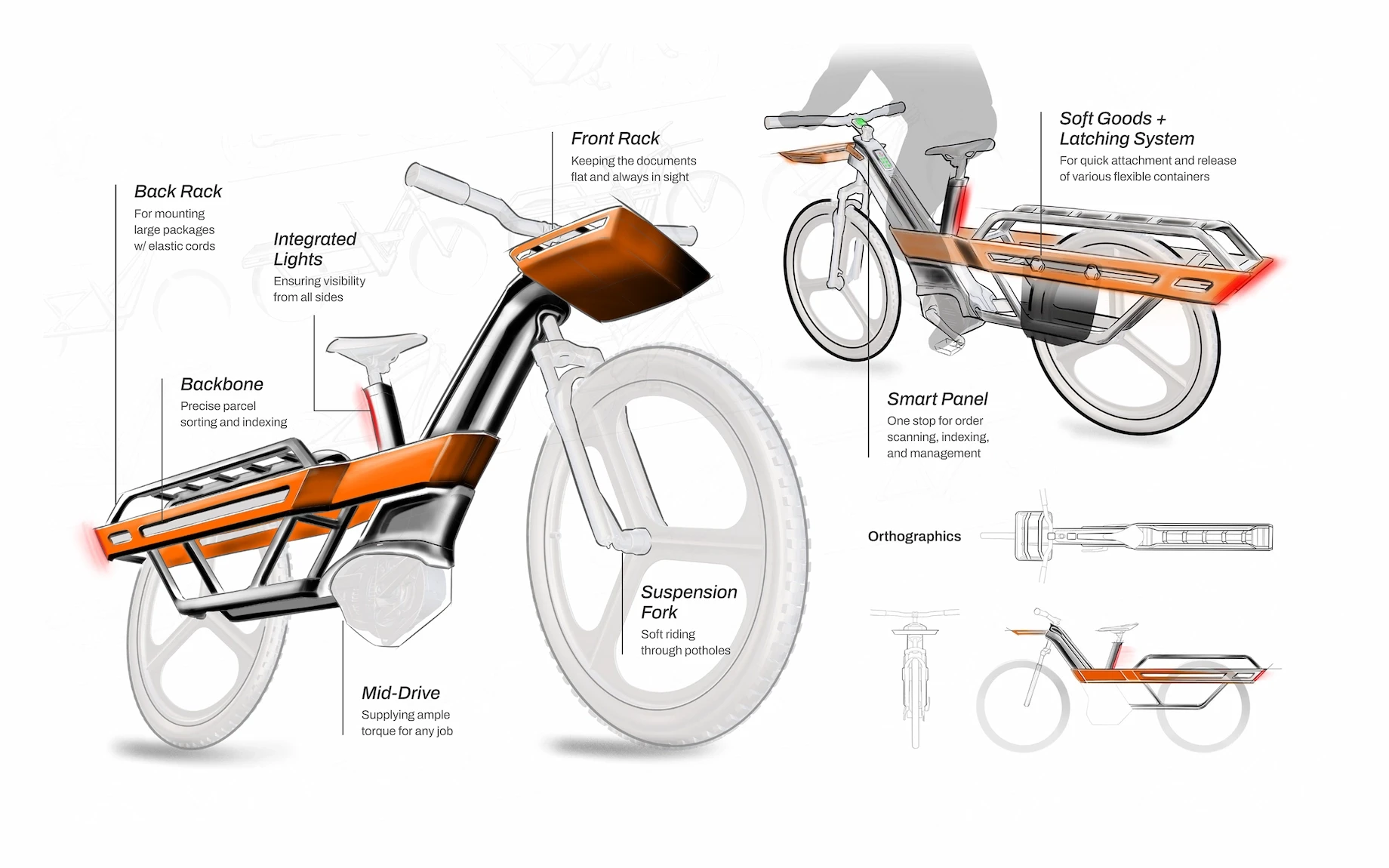
As an e-bike purposefully designed for delivery, the Mercuri concept addresses all four primary pain points found in research through systems of physical and electronic features.
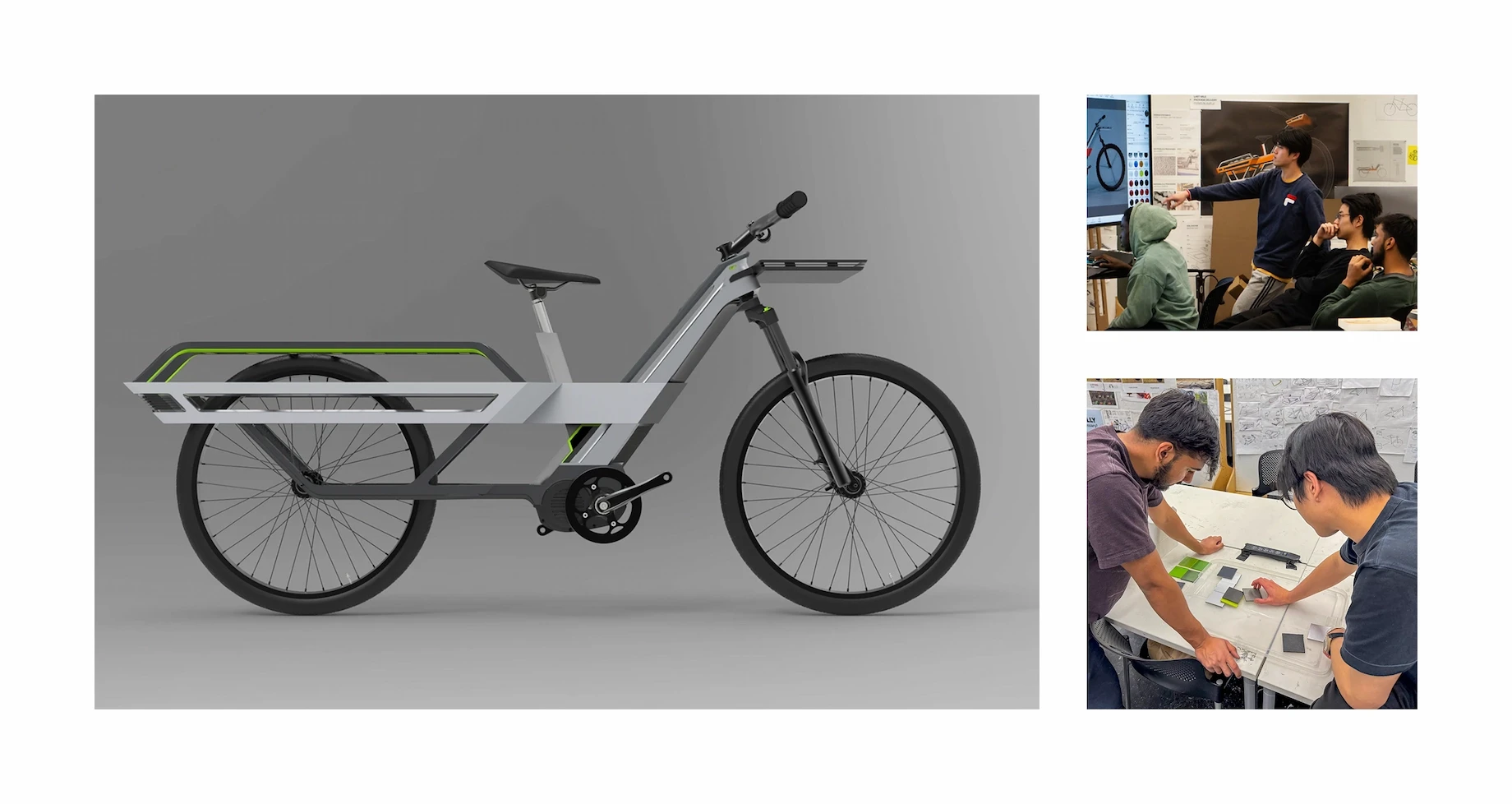
Mercuri | The Outcome
Load Capacity + Versatility
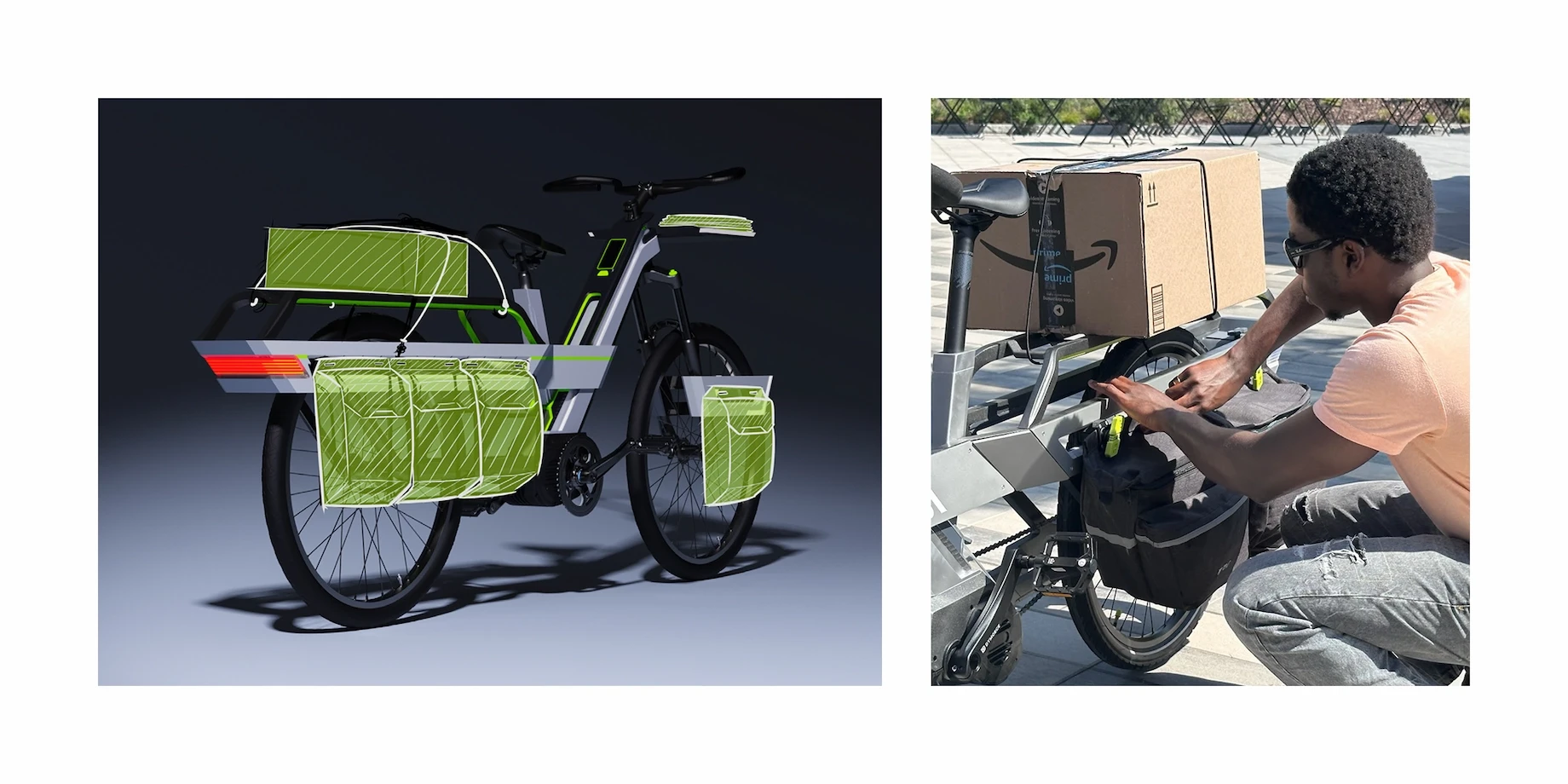
No other bike can carry parcels while staying nimble on the streets like Mercuri. The Backbone and three different attachment points unleash the potential of two wheels for load capacity and variety. The back rack with cords is the platform for oversized packages. All documents are held in the front rack with elastic bands, always visible and never crumpled. The rail system in the Backbone collaborates with a quick-release latching system and soft goods. With a simple twist, the rider can take the bag to load or hand off parcels. Indexing and finding packages are easier than ever.
Indexing + Tracking
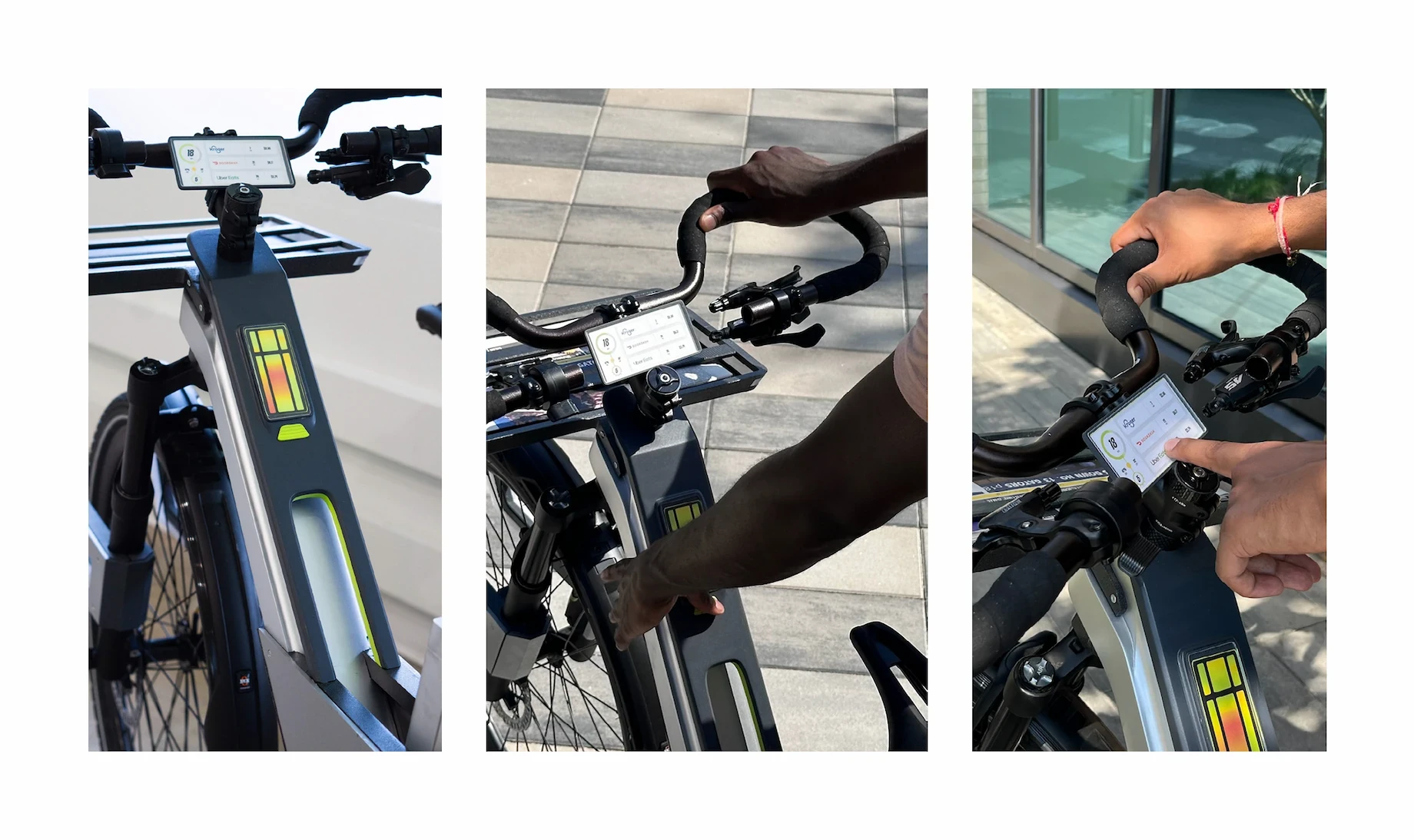
The storage system, scanner, and rail indicator work together to guide the delivery experience. After the rider scans the package with the handheld device hidden in the smart panel, the lighting on the Backbone and the device will lead them to the optimal attachment point for the package based on its size, weight, and destination. Meanwhile, thanks to the onboard electronics, Mercuri can plan the routes, show the load status, and indicate the right packages to deliver upon arrival. Sharing tracking and routing information lowers the cost of communication for all stakeholders involved.
Credit
Team Member
Iretomide Olayeye, Mohen Li, Kush Vakharia
External Partner
Edison Electric Bike Co.
Special Thanks
Kevin Shankwiler